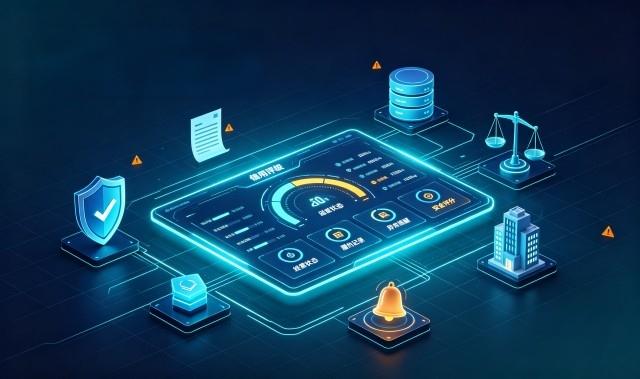
Unveiling the Hidden Landscape: The Strategic Value of Other Commercial Investigation Services

traditional due diligence and market research form the backbone of corporate decision
-making, there exists a critical, often overlooked tier of intelligence gathering known as
Other Commercial Investigation Services. These specialized services go beyond standard
financial audits or public record checks, delving into the nuanced, hidden, and sometimes
opaque aspects of the commercial world. From verifying the integrity of a potential partner
to uncovering internal fraud or protecting intellectual property, these investigations provide
the granular truth that standard reports often miss.
The Spectrum of Commercial Intelligence
Commercial investigation is not a monolith; it is a diverse field catering to specific corporate
vulnerabilities. Other commercial investigation services typically encompass areas that
require a blend of forensic accounting, legal expertise, and human intelligence. This includes
employee background and integrity checks, which go far beyond simple reference calls
to verify past conduct, non-compete violations, and potential conflicts of interest. It also
covers asset tracing and recovery, a vital service for creditors and litigants seeking to
locate hidden funds, offshore accounts, or concealed property that debtors attempt to
shield from legal reach. Furthermore, intellectual property investigations are crucial for
brands fighting counterfeiting rings, requiring investigators to map out complex supply
chains and identify the source of illicit goods.
Navigating the Gray Areas: Fraud and Risk Mitigation
One of the primary drivers for engaging specialized investigation firms is the need to
mitigate commercial fraud and operational risk. In an era where digital footprints can
be manipulated and corporate structures can be deliberately obfuscated, businesses face
threats from both external bad actors and internal bad apples. Internal fraud investigations
are designed to uncover embezzlement, kickbacks, and procurement fraud, often requiring
the analysis of complex data sets and communication logs. Externally, counterparty risk
assessments help companies avoid entering into contracts with entities that have a history
of litigation, regulatory breaches, or financial instability that isn't immediately apparent on
a balance sheet. By proactively identifying these red flags, organizations can avoid
catastrophic financial losses and reputational
damage.
The Methodology: Beyond Public Records
What distinguishes professional commercial investigation from a simple internet search is
the methodology. Legitimate investigators operate within strict legal frameworks, utilizing
open-source intelligence (OSINT), human source networks, and forensic data analysis.
They do not rely solely on what is publicly available; instead, they connect the dots between
disparate pieces of information. For instance, verifying a supplier's capacity might involve
physical site visits to confirm the existence of a factory, rather than relying on photos
provided in a brochure. Similarly, verifying a key executive's background might involve
discreet inquiries within their former industry circles to validate their actual role and
performance, rather than just accepting their LinkedIn profile at face value. This multi
-layered approach ensures that the intelligence gathered is robust, admissible, and actionable.
The Strategic Advantage of Due Diligence
Ultimately, the goal of these investigations is to provide a strategic advantage in negotiation
and decision-making. When a company possesses deep, verified knowledge about a target
or a competitor, they can negotiate from a position of strength. They can identify leverage
points, anticipate objections, and structure deals that protect their interests. In mergers and
acquisitions, for example, a thorough commercial investigation can reveal cultural mismatches
or pending regulatory issues that could derail a deal post-closing. This preventive intelligence
allows leadership to make informed choices, turning uncertainty into calculated risk.
Conclusion
As the global marketplace becomes more interconnected and complex, the reliance on
surface-level data is no longer sufficient. Other commercial investigation services serve
as the essential due diligence layer that protects businesses from the unknown. Whether it
is safeguarding intellectual property, ensuring the integrity of the workforce, or verifying the
solvency of a partner, these services provide the clarity needed to navigate the shadows of
the business world. In the high-stakes game of global commerce, knowing the truth is not
just a luxury—it is a necessity for survival and growth.
Reference Resources
● Dezan Shira & Associates – Due Diligence Services: Comprehensive insights into conducting financial, legal, and operational due diligence across Asian markets, highlighting the importance of verifying target companies.
https://www.dezshira.com/services/due-diligence
● World Bank – Enterprise Surveys: A global standard for firm-level surveys that provides data on the business environment, including issues related to corruption, crime, and business-government relations.
https://www.enterprisesurveys.org/
● MBA – Commercial Due Diligence (CDD): Detailed definitions and frameworks for commercial due diligence, explaining how it assesses internal and external business environments.
https://wiki.mbalib.com/wiki/Commercial_Due_Diligence
● Bureau of Industry and Security – Export Enforcement: Information on how governments investigate and enforce compliance with export laws, illustrating the legal boundaries and importance of investigations.
https://www.bis.doc.gov/index.php/enforcement/office-of-export-enforcement