CrossArkLaw: Accompanied Exhibition Support and Tailored Business Visit Services for Foreign Enterprises Operating in China

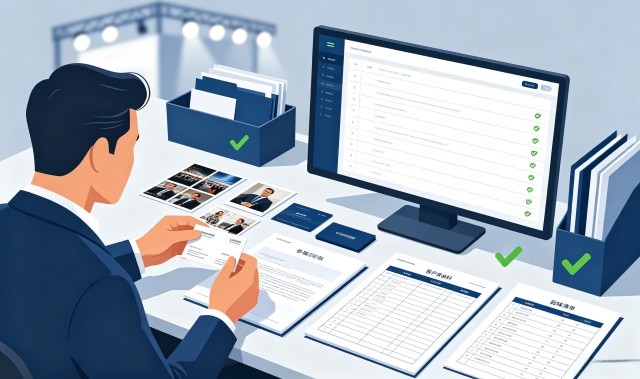
among the most effective channels for overseas companies to source suppliers, discover
local partners, inspect manufacturing facilities, and launch market exploration inside China.
Every year, thousands of foreign purchasing managers, brand representatives, startup
founders and investment executives travel to major Chinese trade shows including the Canton
Fair, China International Import Expo, and industry‑specific specialized expos to pursue real
‑world commercial cooperation. However, many international teams face substantial
practical barriers when organizing exhibition trips and field business visits without local
on‑the‑ground support. Language gaps, unfamiliar exhibition registration workflows, chaotic
local transportation arrangements, difficulty verifying factory credibility, misaligned meeting
agendas, and cultural miscommunication frequently turn promising business trips into missed
opportunities. CrossArkLaw delivers end‑to‑end accompanied exhibition support and
customized business visit services, helping foreign clients navigate the full journey from pre
‑trip planning, on‑site exhibition accompaniment, factory and enterprise field visits, one‑on
‑one business matchmaking, through post‑trip follow‑up documentation. This service covers
the whole lifecycle of inbound commercial travel, resolving typical pain‑points that foreign
business visitors commonly encounter in Mainland China.
Pre‑trip strategic planning is the foundation of a productive exhibition and business
visit journey, and it cannot be simplified to basic travel booking. Many overseas companies
only focus on flight and hotel reservations, ignoring critical preparatory work that directly
determines commercial outcomes. First, accurate exhibition screening and rational itinerary
design are essential. China hosts hundreds of large‑scale trade events annually, covering
consumer goods, industrial hardware, new energy, medical devices, textile manufacturing and
other vertical sectors. Selecting mismatched exhibitions will waste limited travel budgets and
working hours. Our team analyses client product lines, target customer profiles, procurement
objectives and investment intentions, filtering appropriate expos from official industry exhibition
directories, and building a time‑balanced travel schedule combining exhibition attendance,
supplier site inspections, and institutional meetings. The official CCPIT exhibition public service
portal maintains comprehensive and authoritative data on domestic and overseas economic
‑trade exhibitions, offering reliable reference information for international participants to
review exhibition qualification and background information.
Second, formal document preparation for entry and exhibition participation is another
high‑risk pre‑trip segment. Foreign business visitors need correct invitation documents
for M‑category business visa applications unless they qualify for China’s unilateral visa
‑exemption policy for short‑term business stays. Errors in invitation letter format, incomplete
information fields, or non‑compliant supporting materials may lead to visa delays or rejection,
forcing executives to cancel planned trips entirely. Our team assists clients in preparing
compliant business invitation letters, exhibition registration credentials, and meeting
confirmation documents, strictly following requirements published by Chinese consular
authorities for commercial visitor paperwork. We also brief foreign delegates on local entry
rules, accommodation registration obligations, and business etiquette norms in advance.
Poor pre‑trip preparation often results in overseas representatives arriving in China
without pre‑arranged supplier meetings, wandering exhibition halls aimlessly, and
returning home without concrete business leads.
Upon client arrival in China, professional on‑site exhibition accompaniment constitutes
the core of our service package. Unlike ordinary tourist interpreters, our assigned on‑site
specialists combine bilingual interpretation capabilities with practical commercial awareness
and local industry knowledge. On‑site exhibition support includes real‑time consecutive
interpretation during booth communication, quick screening of potential exhibitors,
preliminary qualification verification of target suppliers, on‑site meeting minute
recording, and organized collection of catalogues and sample information. Many foreign
buyers encounter exaggerated product claims from exhibitors during trade fairs; our
accompanying staff raise targeted technical and commercial questions to test supplier
authenticity, helping customers filter out unreliable partners during initial contact. Beyond
booth‑to‑booth touring, we assist clients with exhibition‑related administrative tasks, such
as badge troubleshooting, venue navigation, coordinating temporary meeting rooms within
exhibition complexes, and resolving sudden on‑site emergencies. Large‑scale venues such
as the Canton Fair complex cover enormous physical space; without local guidance, visitors
waste significant time navigating between exhibition zones.
After initial connections are made at trade fairs, custom‑arranged off‑site business visits
and factory audits transform exhibition contacts into tangible cooperation possibilities.
This is where most self‑organized foreign trips fall short. A great number of overseas enterprises
arrange factory visits merely based on exhibition‑obtained contact information, without pre
‑visit risk assessment. Unplanned factory visits can lead to manipulated show‑room
demonstrations, staged production lines, and incomplete disclosure of actual manufacturing
capacity. Our service implements structured pre‑visit confirmation before dispatching clients
to any facility: confirming production scale, core equipment, quality‑control workflows, export
certification status, and real‑world order capacity. We design visit routes, accompany client
delegations to manufacturing plants, industrial parks, high‑tech enterprises and local industry
associations, delivering simultaneous business interpretation throughout face‑to‑face negotiations.
During site tours, our team records key production parameters, takes permitted on‑site notes,
and raises follow‑up commercial questions that overseas representatives may overlook due to
language or cultural barriers.
Business visits are not limited to manufacturing factories. We also coordinate visits to local
trade chambers, industrial parks, government investment promotion agencies, third‑party
testing laboratories and logistics hubs according to client strategic goals. For foreign investors
exploring market entry, meetings with local administrative institutions can deliver first‑hand
policy updates regarding market access, industry incentives and regulatory restrictions. The
Chinese Ministry of Commerce overseas comprehensive service platform publishes open
resources for foreign market entrants, helping cross‑border participants understand China’s
commercial policy framework.
Cross‑cultural negotiation guidance is a frequently undervalued component of successful
China‑focused business visits. Commercial communication habits between Chinese domestic
enterprises and western‑based companies show clear divergence. Local counterparts may
express disagreement indirectly, avoid direct negative responses, or make verbal commitments
that lack formal contractual grounding. Without culturally aware accompanying support,
foreign visitors may misread signals, misjudge partner willingness, or reach oral understandings
that cannot be later enforced. Our accompanying professionals not only provide language
conversion but also identify implicit attitudes during discussions, remind clients to clarify
delivery cycles, payment terms, intellectual‑property ownership, after‑sales responsibilities
and penalty clauses, and prevent costly misunderstandings formed during face‑to‑face talks.
Post‑visit collation and structured follow‑up work distinguish professional business
‑visit support from simple interpretation services. After each exhibition day or field visit,
our team sorts contact lists, organizes detailed meeting summaries, marks supplier strengths,
weaknesses and risk warnings, and categorizes collected samples and document materials.
We classify contacts into priority tiers: high‑potential partners requiring immediate follow‑up,
candidates needing further verification, and contacts to be archived for future reference. Many
international teams return to their home countries with stacks of business cards yet no
structured record, and valuable exhibition leads gradually fade due to time‑zone delays and
lack of organized follow‑up. Our service delivers consolidated bilingual reports after the whole
trip concludes, including supplier profiling, key negotiation points, open action items, and
suggested next‑step schedules. We can further support subsequent written communication
with Chinese counterparties to maintain business momentum after the client departs China.
It is critical to clarify what accompanied exhibition and business visit services do not cover.
Our service is commercial support: we do not provide binding legal judgements, and on‑site
preliminary supplier screening cannot replace formal commercial due‑diligence investigations.
While we observe production conditions during factory tours, we are unable to guarantee
100 % authenticity of every statement made by visited enterprises. For high‑value investment
or procurement projects, we explicitly recommend combining accompanied‑visit services
with separate formal background investigation procedures.
For foreign‑based SMEs and multinational branch offices, investing in structured accompanied
exhibition and business‑visit support delivers measurable return on investment. Well‑managed
on‑the‑ground trips shorten partner‑screening cycles, reduce the probability of selecting
unqualified suppliers, avoid costly cross‑cultural misunderstandings, and maximize the
commercial output of limited time spent in China. Without local professional accompaniment,
even well‑funded business delegations may suffer low efficiency, collect low‑quality leads, and
return home without achieving core market‑exploration objectives. As China continues to host
world‑class trade events, well‑planned, locally‑supported exhibition attendance and targeted
business site visits remain irreplaceable for overseas firms seeking deep engagement with
Chinese markets.
Reference Links (Verified Accessible Official Resources)
1. China Council for the Promotion of International Trade Exhibition Public Service Network:
2. Canton Fair Official Website for International Buyers:
https://www.cantonfair.org.cn/en
3. Ministry of Commerce of the People’s Republic of China Overseas Comprehensive Service Platform:
4. Chinese Consular Affairs Network Visa Guidance for Foreign Business Visitors: