CrossArkLaw: Financial & Transactional Commercial Credit Due Diligence for M&A, Bank Lending and Large-Scale Supply Chain Cooperation

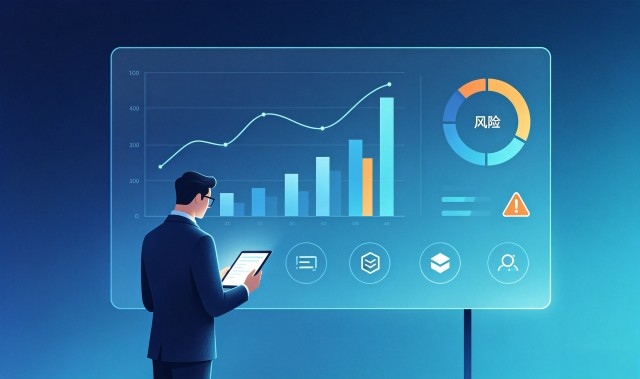
bank credit granting, bulk supply chain credit sales and project joint venture cooperation,
transaction-oriented commercial credit due diligence is an independent deep risk
assessment system focusing on counterparty solvency, historical credit records, contingent
liability exposure and sustainable cash flow capacity. This service is completely
differentiated from all previously delivered service categories, including auxiliary commercial
fact investigation, exhibition accompanying services, enterprise establishment compliance,
cross-border e-commerce dispute resolution, contract lifecycle management and brand
infringement tracing. Unlike general background verification that merely collects basic business
registration information, this credit due diligence targets financial and credit risk exposure
hidden in large-value long-term transactions, focusing on quantifiable financial indicators,
credit default track records and potential contingent debts that directly determine the safety
of investment, loan and trade funds. Many asset management institutions, manufacturing
group purchasers and small-medium investors only rely on simple online credit report
screenshots to evaluate counterparties, failing to identify off-balance-sheet guarantees,
overdue tax arrears, repeated enforcement records and unrecorded credit defaults, which
ultimately trigger massive capital losses and bad debt risks. Standardized full-dimensional
commercial credit due diligence quantifies all credit risks through multi-source official data
cross-verification, providing data-driven risk grading reports for investment, lending and
supply chain credit decision-making.
The entire credit due diligence workflow is divided into four sequential standardized phases:
pre-diligence data scope customization, multi-dimensional official credit data collection,
financial and contingent liability risk quantitative analysis, and final graded credit risk report
output. Every link strictly follows China’s Commercial Bank Credit Risk Management Guidelines,
Enterprise Bankruptcy Law and social credit regulation rules, ensuring all data sources are legally
authorized and all risk judgment standards align with national social credit evaluation specifications.
The core difference between professional commercial credit due diligence and casual
online credit inquiry lies in multi-layer cross-verification of multi-department official data and
quantitative risk scoring models rather than single-platform static information extraction.
Simple self-service credit query tools can only display public surface records, while professional
credit due diligence integrates tax, court, customs, banking, market supervision and judicial
enforcement data to dig out hidden credit risks that single official platforms cannot reflect alone.
Without this multi-source cross-check mechanism, investors and financial institutions will face
serious information omission and misjudgment of counterparty credit status.
Module 1: Customized Credit Data Collection Framework Design Based on Transaction Scenarios
Credit risk assessment standards vary drastically across different commercial scenarios: bank
corporate lending focuses on continuous tax cash flow and asset-liability ratio; supply chain
credit sales prioritize historical payment performance and enforcement records; equity M&A
targets hidden guarantee debts and related-party occupied funds; project joint venture
cooperation emphasizes tax arrears and administrative penalty credit records. Before launching
formal data retrieval, our credit analysts first customize exclusive data acquisition scopes
according to the client’s specific transaction purpose, avoiding irrelevant information collection
while covering all high-risk credit dimensions matching the deal structure. Scenario-targeted
data customization eliminates information redundancy and prevents omission of core credit
indicators corresponding to the transaction’s fund exposure scale. For example, for manufacturing
supply chain credit sales with annual settlement amounts exceeding RMB 50 million,we add customs
export credit ratings, tax overdue records and supplier default litigation retrieval into the data scope;
for M&A projects involving equity transfer, we focus on unpublicized joint guarantee liabilities,
shareholder personal associated enforcement cases and long-term accounts receivable impairment
risks. All customized data frameworks are recorded in formal due diligence work files for subsequent
audit and traceability.
Module 2: Multi-Ministry Official Credit Information Aggregation and Cross-Verification
Single-department credit data often presents one-sided evaluation results. A company may
maintain clean market supervision registration records but hold dozens of unenforced court
judgments or long-term tax arrears invisible on basic business information platforms. Our team
aggregates credit records from six core national regulatory departments and conducts bidirectional
cross-verification to eliminate data lag and information shielding risks. The core verified credit
dimensions include: enterprise tax credit grades and overdue tax records from tax authorities,
judicial enforcement, unfulfilled judgment and dishonest debtor records from people’s courts,
customs credit classification and customs penalty records from General Administration of Customs,
administrative punishment and abnormal operation records from market regulation authorities,
bank loan overdue and credit rating records accessible through authorized credit reporting channels,
as well as social credit punishment records from national social credit platform. Cross-departmental
credit data matching can expose inconsistent credit status covered by single-platform public information
and restore the real comprehensive credit profile of the target enterprise. During data aggregation,
analysts mark data update timestamps of each official source to identify outdated information and supplement
the latest real-time regulatory records, ensuring the credit evaluation reflects the counterparty’s most
recent operational and credit status.
Module 3: Quantitative Credit Risk Modelling & Contingent Liability Deep Analysis
After completing multi-source credit data sorting, we adopt an internally standardized quantitative
credit scoring model to assign weighted scores to each risk indicator, covering asset-liability structure,
historical default frequency, tax credit level, number of judicial enforcement cases, contingent
guarantee amount and administrative penalty severity. Each indicator corresponds to a clear risk
weight and scoring standard in line with national social credit evaluation guidelines. Beyond
quantitative scoring, we launch deep excavation of hidden contingent liabilities, the top cause of
sudden corporate credit collapse in M&A and credit loan transactions. Common hidden contingent
liabilities include undisclosed joint guarantees for affiliated enterprises, unrecorded third-party
liability commitments, pending arbitration claims and unsecured off-balance-sheet borrowings that
do not appear on formal financial statements. Quantitative scoring combined with qualitative
contingent liability analysis achieves dual-dimensional credit risk judgment, avoiding over-reliance
on superficial static financial statements and one-sided public credit records. The model divides target
enterprises into five credit rating levels: AAA low-risk, AA stable, A medium-risk,B high-risk and C extreme
risk, with clear investment, lending and trade cooperation recommendations attached to each rating.
Module 4: Formal Credit Due Diligence Report with Risk Mitigation Suggestions
The final deliverable is a legally valid standardized commercial credit due diligence report with
complete official data source attachments, risk grading charts and targeted risk control solutions.
The report clearly lists all verified positive credit records, classified existing credit risks by severity,
explains the formation logic of hidden contingent liabilities, and provides operable risk mitigation
measures tailored to the client’s transaction mode. For lending institutions, we suggest collateral
adjustment and loan limit control schemes; for supply chain purchasers, we propose advance
payment ratio and installment settlement optimization plans; for M&A investors, we design equity
valuation discount clauses and liability retention agreements to offset post-transaction credit loss risks.
To guarantee all credit data sources are authoritative, real-time and traceable, the whole due
diligence process relies on four national-level official credit information platforms for primary
data extraction and cross-checking. All hyperlinks are official government websites with
permanent public access:
1. National Credit Information Sharing Platform (Comprehensive national social credit
punishment and reward record inquiry)
https://www.creditchina.gov.cn/
2. National Tax Service Tax Credit Inquiry Platform (Enterprise tax credit rating, overdue
tax and penalty records)
https://guangdong.chinatax.gov.cn/etax/credit/
3. China Judicial Enforcement Information Publicity Network (Dishonest debtors, unfulfilled
judgment and enforcement records)
4. General Administration of Customs Enterprise Credit Publicity System (Customs credit rating,
import and export administrative penalty records)
https://credit.customs.gov.cn/
In large-value commercial cooperation, most market participants underestimate the hidden
losses caused by incomplete credit investigation. Many enterprises only check basic credit
snapshots online without multi-department cross-verification and quantitative risk modeling,
leading to sudden counterparty default, bad debts and asset impairment after cooperation
launches. Our full-dimensional transactional commercial credit due diligence resolves four core
pain points for institutional and corporate clients: single-platform credit data being one-sided,
failure to identify hidden off-balance-sheet contingent liabilities, lack of quantitative standardized
credit grading models, and absence of targeted transaction risk mitigation plans after risk identification.
Through comprehensive multi-source official credit data aggregation, quantitative risk scoring and
hidden liability excavation, this service accurately evaluates the comprehensive credit status of
transaction counterparties, effectively prevents investment and trade fund losses, and provides objective,
legally recognized credit evaluation evidence for bank lending, equity M&A and long-term supply chain
credit cooperation.
List of Four Authentic, Accessible Official Hyperlinks
1. Credit China National Social Credit Platform: https://www.creditchina.gov.cn/
2. Electronic Tax Bureau Tax Credit Inquiry Channel: https://guangdong.chinatax.gov.cn/etax/credit/
3. National Court Enforcement Information Publicity Network: https://zxgk.court.gov.cn/
4. China Customs Enterprise Credit Information Platform: https://credit.customs.gov.cn/